
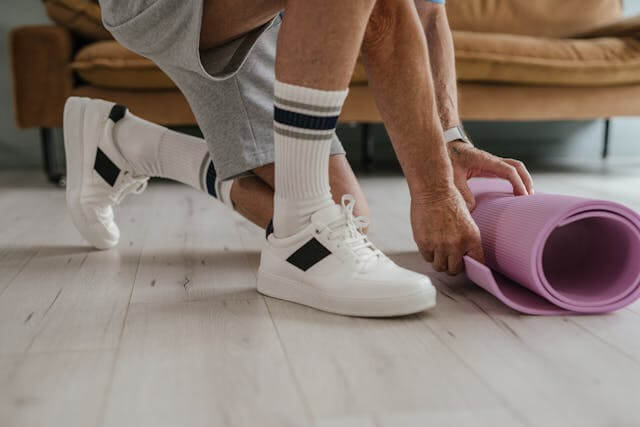
Navigating strength and mobility as someone with EDS has been a learning process of trial, error, and listening to my body. Over the years, I realized that pushing joints too far only leads to pain, instability, and flares, while a focus on controlled strength and functional mobility helps me move more freely, reduce joint popping, and regain energy. Here’s how I approach it:
1. Prioritize Controlled Strength
For hypermobile joints, strength is protection. Without it, mobility exercises can actually increase instability and injury risk.
- Focus on joint stability first: Strengthening the muscles around your joints creates a “supportive brace” that protects ligaments from overextending. For example, strong glutes, quads, and core muscles stabilize hips and knees, reducing painful popping or subluxations.
- Choose safer tools: Bodyweight exercises, resistance bands, and light weights are ideal. They allow you to work muscles effectively without forcing extreme ranges of motion. Even small, controlled movements can trigger neuromuscular adaptations that improve joint control (Behm et al., 2015).
- Personal experience: I started with just glute bridges and banded squats daily. Over time, my knees stopped giving out during daily walks, and I could gradually add weights without flares.
2. Mobility Is Functional, Not Extreme
Mobility in EDS isn’t about stretching as far as possible; it’s about moving joints through a safe, controlled range to improve functional movement.
- Gentle, controlled movements: Small ankle circles, supported hip hinges, or wall-assisted squats help maintain joint motion without overstretching ligaments.
- Micro-sessions throughout the day: Even 1–2 minutes of mobility “snacks” can reduce stiffness from prolonged sitting or daily activity.
- Science backing: Controlled mobility maintains range of motion while activating stabilizing muscles, which is crucial for hypermobile bodies (Reeves et al., 2019).
- Personal note: Early in my journey, I tried traditional yoga stretches and felt unstable for days afterward. Switching to functional mobility reduced flares and made it easier to add strength work.
3. Combine Strength and Mobility
Some exercises offer both benefits simultaneously; perfect for bodies that need stability first.
Examples:
- Glute bridges: Strengthen hips and core while gently moving the spine.
- Clamshells or side-lying hip lifts: Target hip stabilizers safely.
- Supported mini-squats: Use a wall, chair, or TRX for stability while building leg and core strength.
- Seated or supine marching: Engages core and hip flexors with minimal joint stress.
- Heel raises (calf raises): Strengthen ankles and improve lower-leg control.
- Band-resisted rows (light resistance, slow): Strengthen upper back and shoulders without overhead loading.
- Why it works: These exercises activate multiple muscle groups while keeping joints supported, improving both movement quality and functional strength.
- Personal experience: Incorporating Turkish get-ups slowly helped me rebuild shoulder and core control, reducing joint popping and making daily movements like lifting groceries easier.
4. Support Your Joints With Tools
External tools can provide additional safety and improve effectiveness.
- Foam rollers: Release muscle tightness and improve circulation around joints.
- Resistance bands: Provide assistance or resistance to strengthen stabilizing muscles.
- Yoga props (blocks, straps, bolsters): Help maintain correct alignment without overextending joints.
- Knee braces or joint supports: Stabilize hypermobile joints during movement, reduce subluxations, and help you safely perform strength or mobility exercises.
- Science perspective: Properly loaded muscle activation around hypermobile joints reduces subluxation risk and improves long-term joint integrity (Smith et al., 2020).
5. Listen to Your Body
Your needs will vary depending on your EDS “phase,” fatigue, hormonal fluctuations, or even weather changes that affect joint laxity.
- Adapt daily: Some days, I focus more on strength; other days, short mobility snacks are enough.
- Prioritize safety over aesthetics: Moving safely is far more important than looking “perfect” in a stretch or lift.
- Intuitive adjustments: Tracking flares and recovery over time helps me plan sessions around my body’s energy, keeping progress consistent without setbacks.
6. Progress Is Possible – With Patience and Consistency
One of the most important lessons I’ve learned over the past four years is that slow, consistent work pays off. Even with EDS, POTS, and a history of TOS surgeries, it’s possible to gradually build strength, improve joint control, and increase mobility… within safe limits.
- Personal experience: I started with just a few minutes of strength and mobility exercises each day. Over time, I added repetitions, slightly heavier resistance, and longer sessions; all while listening carefully to my body.
- Where I am now: During a “good phase,” I can go to the gym 2–3 times per week, performing exercises that would have been impossible when I started. My joints feel more supported, my energy is higher, and I can move through daily life with less fear of flares.
Key takeaway: Progress in EDS is rarely linear, but with patience, consistency, and respect for your body’s limits, you can improve function, strength, and confidence in movement.
Easy EDS-Safe 10–15 Minute Mobility + Strength Routine
- Cat-Cow Stretch (1–2 minutes) – gentle spinal articulation, low risk
- 90/90 Hip Switches (1–2 minutes) – improve hip stability without extreme flexion
- World’s Greatest Stretch, modified (1–2 minutes per side) – keep torso upright; avoid deep hip drop
- Seated or Supine Knee-to-Chest (1–2 minutes per side) – hip and lower back mobilization
- Deep Squat Hold, supported (1–2 minutes) – hold a wall or chair for stability; move slowly only as far as comfortable
- Banded Shoulder Retractions (1–2 minutes) – strengthen scapular control instead of circular rotations
- Glute Bridges (1–2 minutes) – strengthen hips and core while mobilizing lower back
- Standing Hip Circles, small range (1–2 minutes per leg) – gentle articulation, keep range small
- Foam Rolling (5 minutes) – low-pressure rolling for hamstrings, calves, upper back; avoid hypermobile joints
Tip: For all movements, focus on control, stability, and comfort. Avoid pushing joints to “full range”. Even a small, controlled movement is effective.
Key takeaway
For EDS, strength protects, controlled mobility maintains function, and listening to your body prevents injury. Over time, combining these pillars has allowed me to move more confidently, reduce joint popping, and regain energy for daily life.
 Wellness with EDS
Leave a comment